You are here: Home > Blog
  • A Look at Our FireFlex Acoustic Panels from SoundAway

    When it comes to creating the perfect acoustic environment, having the right soundproofing products is crucial.
  • Elevate Your Environment with UltraLiner Sound Blankets from SoundAway

    When it comes to creating a peaceful environment—whether in your home, workplace, or at an event—effective soundproofing is essential.
  • Enhance Your Space with Echo Drop Acoustic Panels from SoundAway

    In today's noise-filled environment, effective sound management is crucial for both comfort and productivity.
  • Featured FireFlex Products: Wedges, Pyramids, and FabTec Panels

    In our previous discussion, we established the foundational excellence of FireFlex Acoustic Panels—their critical Class A fire rating, their superior sound absorption capabilities, and their lightweight, easy-to-install nature.
  • Guilford of Maine Acoustic Fabrics from SoundAway

    Creating a quiet and peaceful environment is essential in both commercial and residential spaces.
  • Overview of FireFlex Acoustic Panels

    In any space where people gather, work, or create, two critical factors often go overlooked until they become a problem: sound control and fire safety.
  • Radix Collection: Acoustic Fabrics from SoundAway

    In today’s world, the importance of effective sound control in both residential and commercial environments cannot be overstated.
  • Soundproofing and Acoustics for Garage Bands or Home Recording

    You’ve finally decided to take your music seriously. You’ve got the interface, the mics, and the talent, but there’s one glaring problem: the neighbors. Or perhaps it’s the flutter echo in your bedroom making your pristine vocals sound like they were recorded inside a tin can.

    At SoundAway, we know that creating a professional recording environment at home is a balancing act between isolation and internal acoustics. Before you start buying soundproofing products, you need to take a hard look at your space and your lifestyle. True soundproofing is more than just hanging some egg cartons—it’s an architectural challenge that requires the right soundproofing materials and a solid understanding of physics.

    Intro: Setting the Stage for Your Sound

    Before you hammer a single nail or apply a drop of adhesive, you need to conduct a thorough audit of your recording habits. Ask yourself: where and when will you be recording? If you’re a night owl tracking high-gain guitars at 2:00 AM, your residential soundproofing needs are vastly different from those of a podcaster recording during the day. Soundproofing is a two-way street; it keeps the world out of your microphones, but more importantly for your social life, it keeps your creative process from becoming a neighborhood nuisance.

    You also need to consider how important aesthetics are. Is this a dedicated professional space where you want the "studio look" with sleek baffles and clouds, or is this a spare bedroom that still needs to function as a living space? From the industrial, rugged look of UltraLiner to the refined, designer finish of Guilford of Maine fabrics, your choices will define the vibe of your creative sanctuary. A room that looks professional often makes you feel more professional, leading to better takes and more inspired performances.

    Where Will You Record? Finding the Right Space

    Every room in a house offers a unique acoustic fingerprint and a unique set of challenges. Choosing the right "starting block" can save you thousands in soundproofing materials down the line.

    The Garage: The Pro’s Choice

    This is the holy grail for bands. It’s usually separated from the main living quarters, often sitting on a concrete slab that doesn't vibrate like a wooden floor. However, it’s an acoustic nightmare. Parallel concrete walls create massive standing waves, and the thin metal garage door acts like a giant speaker diaphragm, broadcasting your drum fills to the entire block. Garage soundproofing methods focus heavily on mass and decoupling—essentially building a room inside a room.

    The Bedroom: The Modern Standard

    Most home producers start here. Bedrooms often have furniture like beds and curtains that provide natural diffusion, but they lack the density to keep sound in. This is where you’ll focus on "room-within-a-room" concepts or targeted home recording soundproofing materials to stop sound from leaking through the door or the floor. If you're on the second floor, you'll need to consider the best soundproof underlayment to prevent your kick drum from shaking the kitchen downstairs.

    The Closet: The Vocal Sanctuary

    The classic DIY move. A closet is a confined space that is excellent for dry, intimate vocals, provided you treat it correctly. Without sound-absorbing materials, a closet can sound "boxy" because the walls are so close to the microphone. The goal here isn't necessarily to keep sound from escaping—though a heavy door helps—but to stop the sound from bouncing back into the mic and coloring your recording.

    The Bathroom: Utilizing Desired Echo

    Sometimes, you want that natural "wet" sound. The tile surfaces of a bathroom create a bright, natural reverb that's great for certain percussion, handclaps, or soaring vocal tracks. However, it’s hard to control, and the plumbing can introduce unwanted noise. It’s a specialized environment, so keep your setup mobile and your recording windows short.

    What Type of Music Are You Making?

    The frequency spectrum of your music dictates the thickness and density of your soundproofing materials.

    Low Frequencies: Bass-Heavy Genres

    If you are producing EDM, Hip-Hop, or playing in a band with a five-string bassist, you have a "low-end" problem. Low-frequency sound waves are long—sometimes over $50$ feet long—and they are omnidirectional. They don't just hit a wall; they vibrate through it. To tame these, you need thicker acoustic treatment. Cotton Bass Traps are essential here. They have the density and internal structure required to catch those long sound waves in the corners of your room before they pool and create "muddiness" in your mix.

    Mid to High Frequencies: Live Instruments

    For acoustic guitars, vocals, and strings, you are dealing with shorter waves. In these rooms, acoustic materials of 1” or 2” thickness are your best friends.

    • UltraQuiet Cellulose or UltraLiner are fantastic options for these frequencies.

    • Pro Tip: Consider mixing 1” and 2” panels. Not only does this help with a wider range of frequency absorption, but from an aesthetic POV, it adds depth and visual interest to your walls, breaking up the flat, "office" look of a standard room.

    Soundproofing: The Science of Silence

    Soundproofing is the science of keeping sound from traveling between spaces. It is about mass, damping, and airtight seals. If you miss even one of these components, your soundproofing products won't perform to their full potential.

    Step 1: Check for Cracks and Leaks

    Think of sound like water; if there is a crack, it will leak out. Even a gap as small as one percent of the wall area can transmit 50 percent of the sound.

    1. Acoustic Caulk: Check every corner, outlet box, and baseboard. Use a non-hardening acoustic sealant like Green Glue Noiseproofing Sealant to plug these gaps.

    2. Door Frame Seals Kit: The gap between the door and the frame is the #1 weak point in any room. These door seal kits provide a neoprene seal that creates an airtight "refrigerator" style closure.

    3. Door Bottoms: Most interior doors have a half-inch gap at the bottom for airflow. To a sound wave, that's a highway. Install a heavy-duty automatic drop seal to close that gap when the door is shut.

    4. Upgrade the Door: A hollow-core door is effectively a drum. Switch to a Solid Wood Door or, for maximum performance, a QuietSpec Door specifically designed for high STC ratings.

    Step 2: Modifying Existing Walls (The "Good" Method)

    If you don't want to tear down your house, you can modify existing walls by adding mass and damping. This involves adding a second layer of $5/8$” drywall with a layer of Green Glue Noiseproofing Compound sandwiched in between. This compound is a viscoelastic polymer that acts as a damping shim, converting sound energy (vibration) into microscopic amounts of heat. Always finish the perimeter with Acoustic Caulk to ensure the new layer is airtight.

    Step 3: Decoupling (The "Best" Method)

    To truly ensure impact noise (footsteps) or lower frequencies don’t enter or escape the room, you have to break the physical connection between the two sides of the wall. This is called decoupling.

    • The Process: Remove the existing drywall down to the studs.

    • The Hardware: Install IsoClips and Hat Channel. These clips act as shock absorbers for your walls.

    • The Mass: Install two layers of drywall with Green Glue in between.

    • The Result: Because the drywall is "floating" on the clips rather than being nailed directly to the studs, the vibrations from your guitar amp have nowhere to go. This is the gold standard of residential soundproofing.

    Special Focus: The Garage Environment

    The garage presents unique challenges because of its size and construction.

    • The Drum Platform: Drums are physically punishing to a room. Build a floating platform for your kit using IsoTrack and UltraLiner between the joists of the platform. This prevents the "thump" of the kick drum from traveling through the floor and into the rest of the house.

    • The Extensive Project: Drums are incredibly difficult to isolate. An extensive project involves isolating the walls and ceilings of the garage with IsoClips, Hat Channel, and double layers of drywall.

    • The Weak Points: The garage door and windows will always be your weak points. If you don't replace the garage door with a specialized acoustic door, you must treat it with heavy mass-loaded vinyl or specialized garage soundproofing methods to prevent sound leakage.

    Acoustics: Perfecting the Sound Inside

    Once you've stopped the sound from bothering the neighbors, you need to make sure the sound inside the room is balanced. This is where sound-absorbing materials come into play to prevent echoes, standing waves, and frequency buildup.

    DIY Acoustic Panels: Custom Control

    For the bedroom and garage, custom panels are the most cost-effective way to get pro results. Many of our customers choose the DIY route to save on shipping and to customize their room’s look.

    • The Core: Use UltraQuiet Cellulose (2”). This is an eco-friendly, high-performance acoustic core that outperforms standard fiberglass in many frequency ranges.

    • The Fabric: This is the most critical part of the build. You must use Guilford of Maine Acoustic Fabric.

      • Why? Most decorative fabrics are tightly woven, meaning sound reflects off them before it ever hits the absorption material. Guilford of Maine is acoustically transparent. This allows sound to pass through the fabric freely so it can be trapped and absorbed by the acoustic core.

    • The Frame: Wood frames are not provided; they must be built by the customer. Simply build a 1x3 frame, drop in your cellulose core, wrap it in your chosen fabric, and staple it to the back.

    • Versatility: These can also be used as moveable panels with stands (gobos). This allows you to create a temporary "vocal booth" in the middle of a room or place them in front of drums to prevent the cymbals from bleeding into your overhead mics.

    For the Aesthetic Minded

    If you want a space that looks as good as it sounds, we offer several pre-finished options:

    • UltraQuiet Cotton Panels: These offer a clean, soft look and are made from recycled denim. They are incredibly safe for the home and provide excellent absorption.

    • Ceiling Treatments: Don't ignore the space above your head. Fire-rated WhisperWave Baffles or Rondo Baffles are designed to hang from the ceiling to break up vertical reflections.

    • Clouds: Hanging acoustic "clouds" over your mixing desk or drum kit is a great way to improve stereo imaging and stop the ceiling-to-floor "flutter echo" without making the room feel claustrophobic.

    Live Instrument Enclosures

    For loud instruments like drums or guitar stacks in a garage, consider building UltraLiner Enclosures. You can install grommets into the UltraLiner and hang it from a heavy-duty rack (not included). This creates a semi-enclosed space that drastically reduces the "splash" of the instruments in a reflective garage.

    Finishing Touches

    Don't forget the floor. While we've discussed the best soundproof underlayment for isolation, you also need surface absorption. Line your garage walls with UltraLiner 2” to kill the industrial ring of the space, and always use thick rugs on the floor. Rugs provide high-frequency absorption and help keep your gear from sliding around during an intense session.

    Choosing Your Soundproofing Materials Wisely

    When shopping for soundproofing products, it’s easy to get overwhelmed by NRC (Noise Reduction Coefficient) and STC (Sound Transmission Class) ratings.

    • NRC tells you how much sound stays in the room (Acoustics). It quantifies the sound absorption. The scale is 0.0-1.0

    • STC tells you how much sound leaves the room (Soundproofing). It is the average of decibel reduction across several frequency points.

    A professional studio needs both. If you only focus on acoustics, you’ll have a great-sounding room that still gets you a noise complaint. If you only focus on soundproofing, you’ll have a quiet room that sounds like a muddy box. By combining home recording soundproofing materials like Green Glue and IsoClips with high-quality sound absorbing materials like our Cellulose panels, you create a space where you can finally hear your music exactly as it was meant to be heard.

    At SoundAway, we are committed to helping you navigate these technical hurdles. We understand that every garage and bedroom is different. Whether you are building a professional tracking room or just trying to stop your teenager's band from vibrating the windows, we have the specialized tools and materials to get the job done right. Contact us today.

  • Stopping the Shake: A Professional Guide to Mechanical and Motor Isolation

    The Invisible Intruder in Your Framing

    You’ve treated your walls with high-grade insulation, installed heavy-duty doors, and perhaps even double-layered your drywall with acoustic sealant. But despite these efforts, a heavy, rhythmic hum still rattles your coffee mug whenever the garage opens or the HVAC system kicks on. This is what acoustic engineers call "the invisible intruder." It is structure-borne noise—a physical vibration that turns your home's entire framing into a massive, resonating speaker.

    To find true silence, you must move beyond the traditional mindset of simply blocking airborne sound. While soundproofing materials like mineral wool and mass-loaded vinyl are excellent for stopping voices or music, they are often powerless against the raw kinetic energy of a vibrating motor. This is where "mechanical decoupling" becomes the essential strategy.

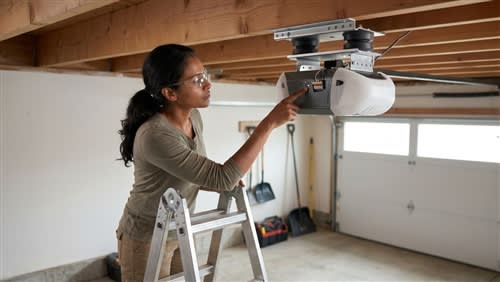
    In this guide, we will explore how to identify, isolate, and neutralize the motors and machinery that traditional 2x4 framing and insulation simply can't reach. Whether you are dealing with a noisy garage door opener, a buzzing furnace, or a rattling pool pump, understanding the physics of isolation is the first step toward reclaiming your quiet. We are moving into a specific "problem-solving phase," addressing high-intent concerns like how to stop garage motor noise and motor vibration noise reduction with professional-grade solutions from SoundAway.

    The Human Element: Why Mechanical Noise Feels Personal

    Vibration-based noise is often described by homeowners as more stressful than high-frequency noises like a dog barking or a television. This is because low-frequency mechanical vibration is felt as much as it is heard. Our bodies are naturally sensitive to low-frequency tremors; it’s a primal response. When your house shakes, even imperceptibly, your nervous system remains on high alert.

    The "Rigid Connection" Trap

    The reason these vibrations are so pervasive is due to the "Rigid Connection." Most residential mechanical systems—garage door openers, air handlers, and water pumps—are bolted directly to studs, rafters, or joists. In the eyes of a builder, this is secure construction. In the eyes of an acoustic consultant, this is a "mechanical bridge." This bridge allows every rotation of a motor to broadcast through the entire skeletal structure of the building.

    Targeted Solutions for Modern Living

    In our experience at SoundAway, solving these issues isn't about the quantity of soundproofing products you use, but the precision of their application. We focus on isolation at the point of contact. By ensuring a single mechanical engagement doesn't disrupt the entire household, we can achieve silence without gutting your walls.

    Precision vs. Bulk

    There is a common misconception that adding more "bulk" (like thicker insulation) will stop vibration. This is rarely the case. Mechanical energy travels through solid objects—screws, wood, and steel—far more efficiently than it travels through the air. Therefore, you don't need more "stuff"; you need the right engineered isolator designed specifically for the load and frequency of your specific vibration source.

    Become an Acoustic Detective: What is Mechanical Decoupling?

    To solve a vibration problem, you first have to understand what it is. Mechanical decoupling is the process of separating a vibration source (the motor) from the building’s frame (the receiver), so they move independently.

    The Spring Metaphor

    Think of decoupling like the suspension in a high-end luxury vehicle. If a car’s wheels were bolted directly to the frame without springs or shock absorbers, the passengers would feel every pebble, crack, and bump in the road. The suspension acts as a decoupler, absorbing the energy of the road before it can reach the cabin. In your home, a garage door isolation kit acts as that suspension, catching the motor’s energy before it hits the ceiling joists.

    The Physics of Sound Transmission (STC & IIC)

    In the world of call-to-action residential soundproofing, we often look at two metrics: Sound Transmission Class (STC) and Impact Insulation Class (IIC). STC measures how well a wall stops airborne sound, while IIC measures how well a floor assembly stops impact noise. Mechanical vibration often falls into a category that bypasses these ratings because it is "injected" directly into the structure. By decoupling, we are effectively creating a break in the circuit, preventing the "short circuit" of sound that occurs when a vibrating motor touches a rigid stud.

    Identifying the Path

    Before you can apply a solution, you must identify the transmission path. Is the sound coming through the floor? Is it a ceiling-mounted vibration? People are realizing that standard mounting brackets are the weak link, which our RSIC-GDS kit can solve. Even specialized applications like golf cart sound insulation are becoming popular as owners look to treat engine compartments with sound absorbing materials to prevent the chassis from acting as a resonator.

    The Physics of Peace: How Isolators Stop Vibration

    When a motor engages, its mechanical torque—the force that makes it spin—unavoidably turns into a structural vibration. This is kinetic energy looking for a path of least resistance.

    Decoupling Kits and Engineering

    Advanced systems like the RSIC-GDS (Resilient Sound Isolation Clip - Garage Door System) are engineered to absorb this energy. These systems use rubber-and-steel isolators that act as a buffer. When the motor shakes, the rubber element compresses and expands, turning that kinetic energy into a tiny amount of heat, which then dissipates safely rather than traveling into your bedroom ceiling.

    Neoprene "Shock Absorbers"

    One of the most versatile soundproofing products in our arsenal is the neoprene isolation gasket. Neoprene is a high-density, closed-cell elastomer. It is specifically designed to withstand high pressure while remaining "rubbery" enough to damp vibrations. Using a neoprene gasket between a motor mount and a wall acts as a "resilient buffer," converting mechanical energy before it can cross the threshold into the building's frame.

    The Air Gap Advantage

    In many isolation strategies, the goal is to create an air gap. Sound cannot travel through a vacuum, and it travels poorly across a physical break in material. By using motor isolators, you create a "floating" mount. This gap is the ultimate barrier. It ensures that the only thing connecting your noisy equipment to your quiet home is a vibration-damping material.

    The Showdown: RSIC-GDS Kits vs. Isolation Gaskets

    When it comes to stopping structure-borne noise from motors, you generally have two paths: a specialized mechanical kit or a versatile damping gasket.

    Part 1: The Pro Choice (RSIC-GDS Motor Isolation Kit)

    The RSIC-GDS is the heavyweight champion of garage door isolation.

    • What it is: A specialized hardware set designed to replace the standard, rigid hanging brackets of a garage door opener.

    • Why it works: It uses patented technology to decouple the motor from the joists. It is the best way to isolate garage door opener noise because it addresses the high-torque start-and-stop vibrations that characterize garage motors.

    • Pros: Unrivaled performance for overhead mechanical noise. It is specifically designed for the weight and movement of garage doors.

    • Cons: Requires a bit more mechanical savvy to install, but the payoff in noise reduction is usually 80-90%.

    Part 2: The Versatile Solution (SoundAway Mat)

    For many other residential applications, a SoundAway mat is the go-to tool.

    • What it is: High-density, adhesive-backed neoprene that can be cut to fit any mounting surface.

    • Applications: This is perfect for HVAC units, pool pumps, and even smaller appliances. It is also the primary component used in golf cart soundproofing to line engine compartments and battery trays.

    • Pros: Highly affordable, easy to apply, and incredibly effective for high-frequency "buzzing" or "rattling."

    • Cons: While excellent for damping, it doesn't provide the same structural "break" that a dedicated RSIC clip provides for heavy machinery.

    Strategic Implementation: Beyond the Basics

    To truly understand the value of mechanical decoupling, let’s look at real-world scenarios where these products transform a living environment.

    Case Study 1: The Master Suite Above the Garage

    This is the most common complaint we receive. A homeowner spends thousands on high-end windows and soundproofing materials for their bedroom walls, yet they are woken up every morning at 6:00 AM when their spouse leaves for work. The sound isn't coming through the window; it's coming up through the floor.

    By installing a garage door isolation kit, you interrupt the vibration at the source. The RSIC-GDS kit replaces the rigid steel straps that typically hold the motor. Because those straps are normally nailed directly into the floor joists of the bedroom above, they act like a tuning fork. The RSIC-GDS introduces a rubber "break" in that connection. Suddenly, the vibration is trapped in the motor housing, and the bedroom remains silent.

    Case Study 2: The High-Performance Golf Cart

    With the rise of luxury golf cart communities, we've seen an increase in the need for golf cart sound insulation. Whether gas or electric, these vehicles produce a significant amount of chassis vibration. Owners are now using SoundAway mat to decouple the motor from the frame and applying sound-absorbing materials to the underside of the seats and floorboards. This creates a "premium" ride feel, reducing the fatigue caused by constant micro-vibrations.

    Case Study 3: The Basement HVAC System

    HVAC systems are notorious for creating a "low-frequency drone" that permeates a home. Often, the vibration is passed through the ductwork or the mounting brackets. Using mechanical decoupling techniques—such as placing the unit on neoprene pads and using flexible duct connectors—can drop the ambient noise floor of a home significantly. This is a core part of residential soundproofing that many general contractors overlook.

    Understanding Your Materials: What to Look For

    When shopping for soundproofing products, the terminology can be confusing. Here is a breakdown of what matters in mechanical isolation:

    1. Durometer: This refers to the hardness of the rubber or neoprene. For motor isolation, you want a durometer that is soft enough to absorb vibration but firm enough to support the weight of the machine.

    2. Damping vs. Isolation: Damping (using gaskets) reduces the intensity of the vibration on a surface. Isolation (using RSIC clips) separates the two surfaces entirely.

    3. Resilience: A material's ability to return to its original shape after being compressed. High-quality soundproofing materials must be resilient to maintain their effectiveness over years of motor use.

    How to Stop Garage Motor Noise: A Step-by-Step Approach If you are ready to tackle the noise in your home, start with the most significant bridge.

    • Step 1: Identify the mounting points.

    • Step 2: Choose the appropriate kit (like the RSIC-GDS for heavy overhead motors).

    • Step 3: Ensure no "flanking paths" exist (e.g., make sure the motor isn't also touching a wall or a shelf).

    • Step 4: Complement the mechanical work with sound absorbing materials on the ceiling to reduce the echo within the garage itself.

    Reclaiming Your Environment from the Machine

    Mechanical noise doesn't have to be a permanent feature of your life. Whether it’s the rattle of a garage door, the drone of an AC unit, or the vibration of a custom vehicle, the solution is always found in the science of decoupling.

    By moving away from "bulk" solutions and toward precision-engineered soundproofing products, you can target the root cause of the problem. For structural decoupling of overhead machinery, the RSIC-GDS isolation kit is the clear industry leader. For more general damping and versatile applications, SoundAway mats provide a professional-grade buffer that stands the test of time.

    Don't let a mechanical bridge in your ceiling ruin your peace. Decouple correctly, choose the right soundproofing materials, and finally enjoy the silence. Your home should be a sanctuary, not a sounding board for your appliances. Reclaim your space today with SoundAway’s professional isolation solutions. Contact us today.

  • The Beginner's Guide to Acoustic Foam: How to Tame Your Room

    We've all been there: you buy great speakers or a new mic, plug it in, and... it sounds terrible.
  • The Quiet Home Wellness Trend

    We spend thousands of dollars on ergonomic chairs, organic linen sheets, high-end water filtration, and air purifiers that promise to scrub every invisible toxin from our environment.
  • The ROI of Quiet Solving the Open Office Crisis

    You know the sound. It’s the low, relentless hum of the HVAC system, the rhythmic clicking of eighty keyboards, and—the ultimate productivity killer—the conversation happening three desks away about someone’s weekend plans.
  • Transform Your Space with the Fabric Wall Track System from SoundAway

    Creating the perfect environment for sound quality and aesthetic appeal is increasingly important in both residential and commercial settings.
  • Acoustics

    Read about acoustics and acoustic paneling for various settings, along with best practicing for acoustical control.
  • Installation Guides

    Follow our installation guides to ensure your soundproofing and acoustic control solutions are being installed correctly to maximize their effectiveness.
  • Residential Soundproofing

    Working on some home soundproofing projects? Learn everything you need to know about managing excess noise in your living spaces in an aesthetic manner.
  • Soundproofing Applications

    Read about the many useful applications of soundproofing and acoustic control with Soundaway, your one-stop shop for all noise reduction needs.
  • Technical Reference

    Check out our technical reference guides for additional information on how to best reduce noise in any environment, along with how to follow noise reduction regulations.